Best Klaviyo Flows for Shopify Stores That Actually Drive Revenue

If you are running a Shopify store, chances are you already use email marketing in some form. Maybe you send campaigns during promotions or holidays. Maybe you have a basic abandoned cart setup.
But here is the gap most brands do not realize.
The real revenue does not come from occasional campaigns. It comes from flows that work in the background every single day.
Well-built Klaviyo flows can quietly generate 30 to 50 percent of your email revenue without constant effort. They catch customers at the right moment, with the right message, when intent is highest.
This guide breaks down the flows that actually matter, how they work, and what separates average setups from high-performing ones.
The best Klaviyo flows for Shopify stores usually cover the full customer journey, from first signup to repeat purchase and re-engagement.
Table Of Contents
What Are Klaviyo Flows and Why Shopify Stores Rely on Them
Klaviyo flows are automated email sequences triggered by behavior.
Someone subscribes to your list. They enter a welcome flow.Someone views a product. They enter a browse flow. Someone adds to cart but leaves. They enter a recovery flow.
This is not just automation for convenience. It is automation tied directly to intent.
Instead of pushing messages out and hoping people care, flows respond to what users are already doing.
For Shopify brands, that translates into:
Higher conversion rates without increasing traffic
More repeat purchases without extra ad spend
A predictable layer of revenue that compounds over time
The key difference is this. Campaigns interrupt. Flows respond.

The Core Klaviyo Flows Every Shopify Store Needs
Most articles list flows. The better question is which ones actually move revenue.
Here are the seven that consistently perform across almost every eCommerce vertical.
1. Welcome Flow
This is where everything starts. Someone gives you their email, and you have a short window to convert that attention into a first purchase.
A strong welcome flow does not just say hello. It builds trust fast.
You want to show what makes your brand different, what people usually buy, and why they should care now, not later.
What works well in practice:
A clear incentive or reason to buy
Social proof early in the sequence
A simple path to best-selling products
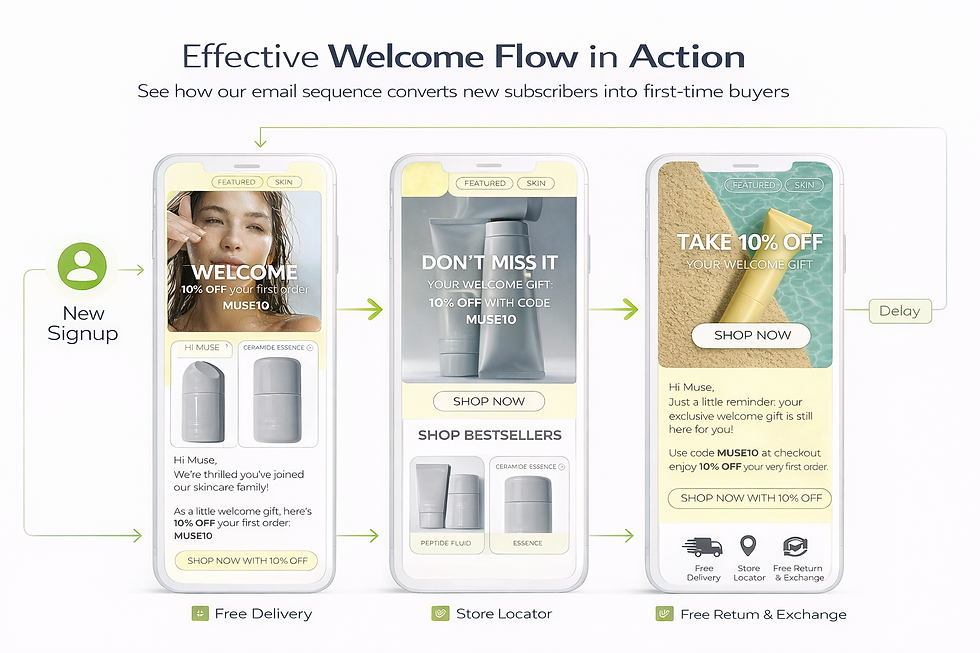
Most brands underestimate this flow. In reality, it often drives a large share of total email revenue because it captures fresh, high-intent users.
2. Abandoned Cart Flow
People leave carts all the time. That is normal behavior.
The difference between average and strong brands is how much of that revenue they recover.
A good abandoned cart flow feels helpful, not pushy. It reminds, reassures, and then nudges.
What typically works:
First email as a simple reminder
Second email adds urgency or answers objections
Third email may include a small incentive if needed

This is usually the highest ROI flow because it targets users who were already very close to purchasing.
3. Browse Abandonment Flow
This one is more subtle and often overlooked.
These are people who showed interest but did not take action yet. They viewed products, maybe more than once, but left without adding anything to cart.
If you ignore them, you lose warm traffic.
If you approach them correctly, you guide them back before they forget about you.
Best approach:
Keep tone lighter than cart recovery
Focus on product discovery and benefits
Avoid aggressive discounts too early

This flow helps you convert interest into intent.
4. Post Purchase Flow
Most brands treat the purchase as the finish line. It is actually the starting point of retention.
After someone buys, they are more open than ever to your brand.
A well-structured post purchase flow builds connection and increases lifetime value.
What works:
Thank you message that feels human
Education or tips related to the product
Smart cross-sell or upsell after the right delay

This is where you turn one-time buyers into repeat customers.
5. Abandoned Checkout Flow
This is often confused with cart abandonment, but it is not the same.
These users started the checkout process. That means something stopped them at the last step.
Common issues include:
Unexpected shipping costs
Payment friction
Lack of trust signals
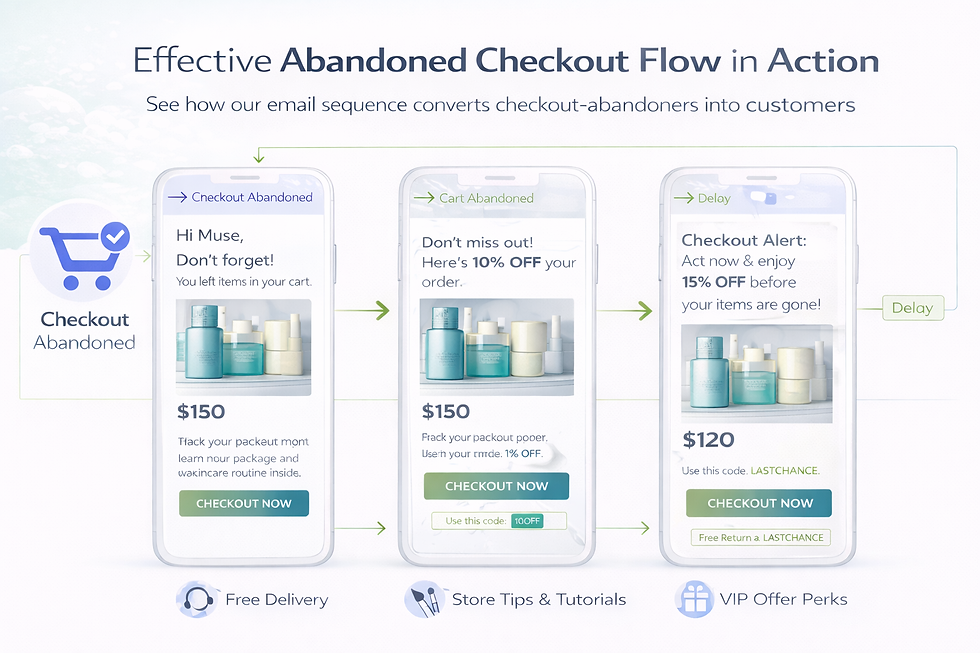
Your job here is not just to remind. It is to remove friction.
This flow should be fast, clear, and reassuring.
6. Winback Flow
Over time, customers go quiet. That is inevitable.
A winback flow gives you a structured way to bring them back instead of losing them completely.
This is where tone matters a lot. You can test emotional messaging versus incentives and see what resonates.

Some customers need a reminder. Others need a reason.
7. Replenishment Flow
If you sell products that run out, this flow is extremely valuable.
Timing is everything here.
You want to reach the customer right before they need to reorder, not too early and not too late.

When done right, this flow feels almost like a service rather than marketing.
How These Flows Work Together
Individually, each flow drives value.
Together, they create a system.
A typical high-performing setup looks like this:
Welcome flow converts new subscribers
Browse and cart flows capture active intent
Post purchase and replenishment increase retention
Winback reactivates lost customers
This creates a continuous loop where users move through different stages without needing constant manual input.
That is where real scalability comes from.

Where Most Shopify Stores Go Wrong
Many brands technically have flows set up, but they still underperform.
The issue is rarely the tool. It is execution.
Common problems include:
Generic messaging that feels the same for every user
Too many emails without a clear structure
Weak design that does not match the brand
No testing of subject lines, timing, or offers
The result is a system that exists but does not convert.
What Kind of Revenue Can You Expect
While results vary, there are consistent patterns across eCommerce.
Welcome flows often contribute a significant share because they capture new users.Cart and checkout flows bring back lost revenue. Retention flows build long-term value.
Combined, flows can account for a substantial portion of total email revenue when done properly.
The important point is not the exact percentage. It is the consistency. Flows work every day, not just during campaigns.

How We Approach Klaviyo Flows at Lumilinx
Setting up flows is relatively easy. Building flows that actually perform is a different task.
At Lumilinx, we treat email marketing as a revenue system, not a checklist.
That means:
Mapping flows to your actual customer journey, not a template
Writing copy that reflects how your customers think and buy
Designing emails that feel like your brand, not a generic layout
Continuously testing and improving based on real data
In most cases, we implement a full ecosystem of flows that work together rather than isolated sequences.
Final Thoughts
Klaviyo flows are not just a nice addition anymore. They are a core part of how modern Shopify brands generate revenue.
The gap between average and high-performing stores is not whether they use flows. It is how well those flows are built, connected, and optimized over time.
If your email marketing feels inconsistent or underwhelming, the fastest way to improve results is to fix the foundation.
And that foundation is your flows.


Comments